

Bermuda and the Bahamas: coral bleaching heat stress
How close the corals of Bermuda and the Bahamas are to bleaching: NOAA satellites compare the water at its 4 reef areas with each reef's normal summer peak, add up the extra heat over the last 12 weeks and give each reef an alert level. Figures for November 20, 2026, updated once a day. How to read it
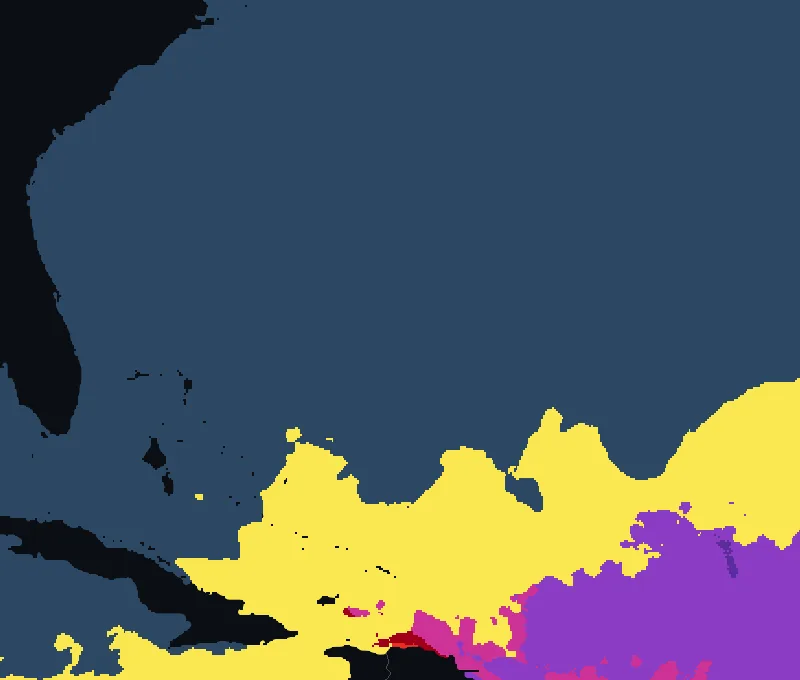 Turks and CaicosCentral BahamasBermudaNorthern Bahamas
- No stress
- Bleaching Watch
- Bleaching Warning
- Alert Level 1
- Alert Level 2
- Alert Level 3
- Alert Level 4
- Alert Level 5
Open the interactive heat-stress map
Reef areas of Bermuda and the Bahamas
| Reef area | Alert today | Heat built up, 12 weeks (°C°F-weeks) | Water today | Above its summer peak | Where |
|---|---|---|---|---|---|
| Turks and Caicos | Bleaching Watch | 13.824.9 | 29.4°C84.9°F | +0.6°C+1.2°F | 22°N 73°W |
| Central Bahamas | Bleaching Watch | 9.416.9 | 28.7°C83.6°F | no | 24°N 77°W |
| Bermuda | No stress | 10.018.0 | 23.8°C74.9°F | no | 32°N 65°W |
| Northern Bahamas | No stress | 3.66.4 | 27.3°C81.2°F | no | 27°N 78°W |
Source: NOAA Coral Reef Watch
Values for each reef area as NOAA Coral Reef Watch publishes them for its virtual stations. Heat stress is a risk of bleaching, not a report of bleached corals. What the alert levels mean.
The reefs of the open western Atlantic
Outside the Caribbean Sea, NOAA Coral Reef Watch follows four reef areas in the western Atlantic: Bermuda, the northern and central Bahamas, and the Turks and Caicos Islands at the south-eastern end of the Bahamas chain.
Bermuda: the northernmost reefs of the Atlantic
Bermuda, at about 32°N, has the northernmost coral reefs in the Atlantic Ocean. Corals can grow so far from the tropics there because the islands sit in the path of the Gulf Stream, which carries warm water up from the Caribbean and the Gulf of Mexico. The water there warms most in August and September.
The Bahamas and the Turks and Caicos
The islands of the Bahamas rise from shallow limestone banks fringed with reefs. Off the east coast of Andros lies the Andros Barrier Reef, more than 200 km124 mi long and often described as the third-largest barrier reef system in the world. The water around Nassau averaged 29.8°C85.6°F in August over 2003 to 2025, and bleaching alerts here, as in Florida next door, build in late summer.